Dog SVG Design, I Love My Doberman
A Designer’s First Look: Clean, Confident, and Instantly Recognizable
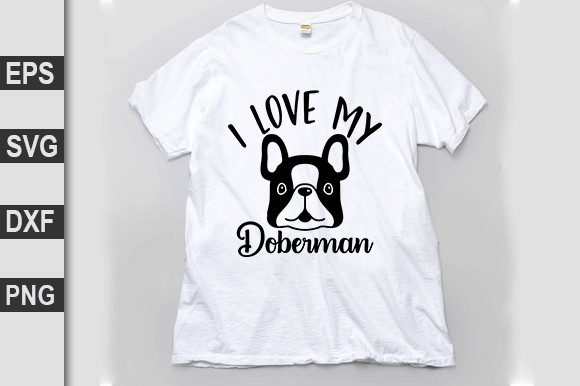
When I opened the Dog SVG Design, I Love My Doberman, my first thought wasn’t “cute” — it was “ready to stitch.” The silhouette is strong and balanced, with a confident head tilt and clean outline that reads clearly even at small scales. The typography sits comfortably beneath the dog, not competing but complementing — no cramped kerning or awkward spacing. It feels like a design made for real life, not just screen display. As someone who’s stitched hundreds of pet-themed embroidery files, I appreciate how this one avoids over-detailing: no tiny whiskers, no fussy ear veins, no unnecessary interior lines that would vanish under thread. That restraint makes it ideal for machine embroidery design — especially on apparel and accessories where clarity matters more than illustration-level precision.
Where It Shines: Real Projects, Real Customers
Last week, I used Dog SVG Design, I Love My Doberman to embroider a set of cotton canvas tote bags for a local dog rescue fundraiser. We chose navy fabric with white thread — and the contrast held beautifully. The design scaled cleanly from 3.5" to 4.75" without distortion, and the lettering stayed legible even at the smaller size. It worked just as well on a midweight French terry sweatshirt (with tear-away + cutaway stabilizer), and on a soft organic cotton baby onesie (light tear-away only). What stood out wasn’t just technical performance — it was emotional resonance. Customers paused, smiled, and said things like, “That’s *exactly* how my Doberman looks when he’s waiting for dinner.” That kind of connection is rare — and valuable — for Etsy sellers, boutique owners, and craft fair vendors building handmade product lines around personality and pride.
Smart Fit for Your Most Common Embroidery Projects
- Tote bag design: Holds up well across seams and handles; minimal fill stitch density keeps it lightweight and flexible.
- Sweatshirt embroidery: Bold shape reads through fleece texture without sinking or blurring.
- Embroidered patch: Clean edges mean crisp heat-press or sew-on results — no fraying corners.
- Baby embroidery: Simple curves and open negative space reduce stitch count and tension risk on delicate fabrics.
- Holiday embroidery: Works year-round, but especially strong for birthday gifts, adoption anniversaries, or “Dog Dad/Mom” Father’s/ Mother’s Day items.
Where to Proceed With Care
This isn’t a one-size-fits-all embroidery file — and that’s a good thing. Its strength lies in intentional simplicity, which means some applications need thoughtful prep. Avoid using Dog SVG Design, I Love My Doberman on highly textured fabrics like bouclé or thick terry cloth without testing first — the silhouette can soften. On stretchy fabric (think ribbed knits or lightweight jersey), use a light cutaway stabilizer and consider reducing stitch density slightly to prevent puckering. For caps or curved surfaces, test placement early: the horizontal layout works best centered above the bill or on the front panel — avoid side panels where distortion creeps in. And while the lettering is clear, don’t shrink it below 2.25" tall if stitching on dark fabric — small serif details in the “I” and “D” can blur without sufficient thread coverage.
What It Adds — and What It Doesn’t Pretend To Be
This design elevates a finished product by reinforcing authenticity. When customers see Dog SVG Design, I Love My Doberman on a handmade apron or pillow cover, they don’t read “generic dog graphic” — they read “this person *gets* Dobermans.” That builds trust, especially for small shop product listings where buyers scan quickly. It also supports brand consistency: whether you’re selling embroidered tea towels or custom pet portraits on Etsy, this design fits neatly into a cohesive visual language — warm, confident, uncluttered. It doesn’t try to be an applique design or multi-layer decorative motif, and that’s its advantage. It’s a focused digital embroidery file built for impact, not ornamentation.
Practical Notes Every Embroidery Designer Should Run Through
- Test the design on scrap fabric matching your final project — especially for thread color contrast and stabilizer pairing.
- Review stitch density in your embroidery software; if it exceeds 12,000 stitches, consider simplifying small interior areas for delicate fabrics.
- Confirm hoop size compatibility before digitizing — this layout fits comfortably in a 4"x4" hoop at standard sizes, but verify if scaling beyond 5".
- Inspect corners and curves at 200% zoom — look for jagged vector points or unintended overlaps that could cause jump stitches.
- Check black-and-white mockups: does the design retain shape and hierarchy without color cues?
- Compare performance on light vs. dark fabric backgrounds — adjust underlay or thread weight accordingly.
- Use appropriate stabilizer: light cutaway for knits, tear-away for stable wovens, fusible for patches.
- Confirm licensing terms before listing finished products or reselling the digital embroidery file — this ZIP includes EPS, SVG, PNG, and DXF files, but commercial rights must be verified directly with the source.
Final Thought: A Reliable Workhorse, Not Just Another Graphic
Dog SVG Design, I Love My Doberman won’t wow you with flash — it’ll earn your trust through consistency. It’s the kind of T-Shirt Designs asset that quietly strengthens your craft business: easy to list, fast to stitch, emotionally resonant to sell. Whether you’re prepping personalized gifts, building a holiday embroidery collection, or sourcing reliable design assets for client work, this file delivers practical value without compromise. Just remember — great embroidery starts before the needle drops. Test it. Touch the fabric. Hold the thread up to light. Then stitch with confidence.