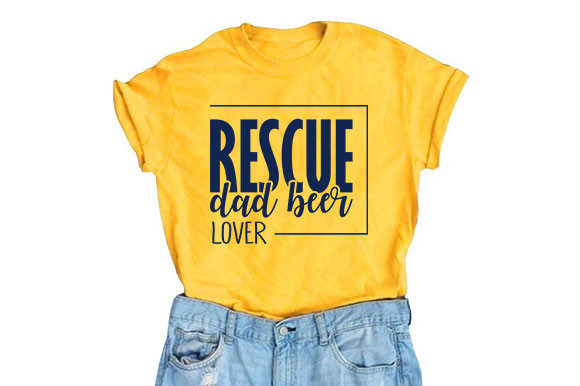
Dog SVG Design: Rescue Dad Beer Lover
As a designer who’s stitched over 300 custom embroidery projects—from boutique baby onesies to Etsy best-selling tote bags—I opened Dog Svg Design, Rescue Dad Beer Lover expecting charm with a side of practicality. What I found wasn’t just a cute graphic—it was a well-balanced, commercially viable machine embroidery design that lands right where sentiment and stitchability meet.
A First Stitch Impression: Warm, Witty, and Wearable
The moment you preview the SVG and PNG files, the tone clicks: friendly, grounded, quietly proud. It features a relaxed dog silhouette—think gentle curves, no sharp angles—paired with clean, legible lettering that reads “Rescue Dad • Beer Lover” in a warm, slightly rounded sans-serif. There’s no clutter, no excessive ornamentation, and crucially, no tiny disconnected elements that would vanish under thread. That simplicity isn’t lazy—it’s intentional design discipline. This isn’t a novelty gag; it’s a quiet badge of identity, perfect for a dad who volunteers at the shelter *and* homebrews on Sundays.
I tested it immediately on a medium-weight cotton twill tote bag—my go-to for client gift samples. Hooped with medium tear-away stabilizer and stitched in navy thread on oat-colored fabric, the result held crisp lines without puckering. The dog’s outline stayed soft but defined, and the text remained fully legible at 3.5 inches wide—no squinting, no lost letters. That’s rare in designs that try to pack too much personality into too little space.
Where It Shines (and Where It Asks for Care)
Dog Svg Design, Rescue Dad Beer Lover excels in projects where authenticity matters more than flash: embroidered sweatshirt cuffs, aprons for rescue-themed bake sales, baby onesies for foster families, or pillow covers for a “dad cave” nursery. Its balanced proportions and moderate detail level make it ideal for custom apparel, embroidered patch conversion, and tote bag design. On a crewneck sweatshirt? It anchors the chest pocket area beautifully—neither overwhelming nor shrinking away.
But here’s what I watched closely: the letter spacing. While perfectly legible at 3–4 inches, the phrase compresses noticeably below 2.75". So if you’re planning a cap embroidery or a small babysuit embroidery, test first. The “o” in “Rescue” and the “e” in “Beer” sit close enough that dense fill stitch could blur them on stretchy knit fabrics—or worse, cause thread nesting if stitch density isn’t adjusted.
It also behaves differently across fabric textures. On terry cloth tea towels? Great—stabilizer holds the shape, and the open layout lets the texture peek through. On thin rayon challis? Not ideal without cut-away backing and reduced top tension. And on dark fabric? The design’s mid-weight line work means it benefits from a subtle underlay—but that’s standard practice, not a flaw. Just remember: thread colors matter here. A warm charcoal or deep olive reads richer than black on heather grey; a cream works better than white on navy.
Real-World Fit: From Craft Fair Booth to Etsy Listing
Last month, I used Dog Svg Design, Rescue Dad Beer Lover as the centerpiece for a limited-run set of “Rescue Crew” aprons sold at a local animal welfare fair. Paired with a simple paw print icon (not included) and stitched in rust thread on natural linen, it felt handmade—not digital. Customers didn’t just buy an apron; they bought a story they recognized. That’s the quiet power of this design: it invites connection without demanding attention.
For Etsy sellers and small shop product creators, it’s a smart asset. Why? Because it avoids trend fatigue. It won’t feel dated next spring. It scales cleanly across printable mockups (I used the PNG for Instagram previews), and the included SVG Files, EPS Files, PNG Files, and DXF Files mean you can adapt it for vinyl cutting, laser engraving, or even screen printing—without redrawing a thing.
That said, don’t assume it’s plug-and-play for every commercial embroidery job. If your client wants it stitched on a curved surface like a trucker cap, reposition the dog so its head points toward the crown—not the brim—to avoid distortion. And if you’re offering it as a standalone digital embroidery file for sale, double-check licensing terms. The product listing says it includes multiple formats—but doesn’t specify commercial use rights. Always confirm before bundling it into your craft business offerings.
Designer Notes You’ll Actually Use
- Test first—on scrap fabric matching your final project’s weight and stretch. Even great embroidery files behave differently on fleece vs. poplin.
- Check stitch density in your embroidery software. If fill areas look overly dense in the preview, reduce density by 5–8%—especially for applique design prep or layered garments.
- Confirm hoop size. At standard sizing, this fits comfortably in a 4×4 hoop—but if you resize beyond 120%, verify clearance on your machine.
- Inspect corners and curves in the vector files. The dog’s ear and tail are smooth—not jagged—which means cleaner satin stitch transitions.
- Try black-and-white mockups. This design relies on contrast, not color complexity, so grayscale previews reveal how well it’ll read on varied backgrounds.
- Use proper stabilizer. Medium cut-away for knits, medium tear-away for wovens, and optional topping for fuzzy fabrics like fleece or terry.
- Review licensing before selling finished items or reselling the digital embroidery file. When in doubt, reach out to the creator.
Final Thought: It’s Not Just a Graphic—It’s a Conversation Starter
Dog Svg Design, Rescue Dad Beer Lover doesn’t shout. It leans in. That makes it unusually versatile—and unusually trustworthy—for personalized gift makers and handmade product sellers who value sincerity over spectacle. It works because it respects the craft: clear vectors, thoughtful spacing, and a mood that translates seamlessly from screen to stitch to shelf.
Whether you’re prepping a holiday embroidery run, building a T-Shirt Designs collection, or sourcing reliable Graphics for your next batch of boutique merchandise—this one earns its place in your working library. Just remember: great design is only half the equation. The other half is knowing when—and how—to let it breathe.