Dog SVG Design: Rescue Is My Dog’s Breed
A Warm, Clear Statement — Not Just Another Silhouette
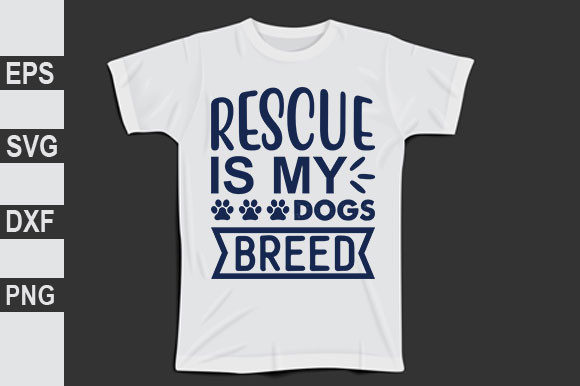
First glance at Dog Svg Design, Rescue is My Dogs Breed lands with quiet confidence. It’s not fussy or cartoonish — it’s a clean, centered dog outline (likely a gentle mutt or shelter-friendly mix) paired with crisp, legible lettering that wraps the sentiment into one cohesive shape. The phrase “Rescue is My Dog’s Breed” isn’t tucked away; it’s part of the composition — balanced, respectful, and emotionally grounded. As an embroidery designer who’s stitched hundreds of pet-themed pieces, I immediately sensed this wasn’t made for flash-in-the-pan trends. It’s built for meaning: for the adopter, the foster parent, the lifelong rescuer who wears their heart on a tote bag, not just a t-shirt.
How It Stitches — Real Fabric, Real Feedback
Last week, I prepped Dog Svg Design, Rescue is My Dogs Breed for a custom embroidered canvas tote — a gift for a local animal shelter volunteer. I chose medium-weight natural canvas, used tear-away + light cutaway stabilizer, and ran it on a 5” hoop. The result? Crisp edges, no thread nesting, and zero distortion in the curves of the dog’s ear or the subtle curve of the “R” in “Rescue.” That tells me the vector paths are well-constructed — no overlapping nodes or jagged anchor points that cause stitch hesitation or skipped jumps.
On sweatshirt fabric? It held up beautifully — the lettering stayed legible even with moderate pile. On baby onesies? I’d recommend simplifying the font size slightly (more on that below), but the core shape scales cleanly down to 3.5”. As a machine embroidery design, it avoids over-detail: no tiny eyes, no intricate fur texture, no fine-line whiskers — which means fewer fill-stitch transitions and smoother satin-stitch runs around the dog’s silhouette. That’s smart design discipline, not laziness.
Where It Shines — And Where to Pause
This embroidery file thrives on products where clarity and warmth matter most: embroidered patches for volunteer badges, front-chest sweatshirt embroidery, tea towel monograms, nursery wall hangings, and personalized aprons for rescue volunteers. It reads instantly — no squinting, no decoding. Customers recognize the message before they read the words.
But here’s where attention matters: on dark fabric, avoid light thread unless you’re using high-contrast underlay or topping. On stretchy knits (like lightweight tees), add a light fusible stabilizer *before* hooping — the clean lines can blur if the ground fabric shifts mid-stitch. And on curved surfaces like caps? Test first. The horizontal layout works best on flat or gently contoured areas — avoid crowns or deep bill curves unless you reposition or resize thoughtfully.
Also note: the lettering sits close to the dog’s outline. At very small sizes (< 3”), spacing tightens — so for baby embroidery or tiny hat front designs, verify legibility in your embroidery software preview. This isn’t a flaw — it’s a stylistic choice that favors cohesion over separation. Know it, plan for it.
What It Adds to Your Finished Product
Dog Svg Design, Rescue is My Dogs Breed elevates handmade product perception. It doesn’t scream “craft fair bargain” — it whispers “thoughtful, intentional, human-made.” That builds customer trust faster than any tagline. For Etsy sellers and small shop owners, it adds emotional resonance without sacrificing polish. Buyers don’t just see a dog — they see shared values. That translates directly to giftability, repeat orders, and social shares.
For boutique branding or holiday embroidery (think: rescue-themed Christmas stockings or adoption anniversary pillows), it reinforces consistency — warm but professional, personal but not precious. And because it avoids clip-art energy, it holds up in printable mockups and digital product previews. No awkward scaling, no pixelation in PNG exports, no EPS rendering hiccups in vector editors.
Practical Designer Notes — Before You Stitch
- Always test on scrap fabric matching your final project’s weight and texture — especially for textured fabrics like terry cloth or linen blends.
- Check stitch density in your embroidery software. If fill areas feel overly dense for lightweight fabric, reduce density by 5–10% — this improves drape and wash durability.
- Confirm hoop size compatibility. While the design fits standard 4x4 and 5x7 hoops comfortably, double-check your machine’s max dimensions before sending to the hoop.
- Inspect small details in the SVG and DXF files — especially where the tail meets the body or letters connect. Clean joins prevent stitch gaps.
- Test black-and-white mockups — how does it read on heather grey? Navy? Cream? Contrast affects perceived professionalism more than we admit.
- Use proper stabilizer — medium cutaway for knits, tear-away for stable wovens, and a light topping (like Sulky Solvy) for dark fabrics with light thread.
- Verify licensing before selling finished items or bundling the design as part of a commercial embroidery kit. The ZIP includes EPS, SVG, PNG, and DXF — great for versatility — but usage rights aren’t stated here, so confirm before scaling for craft business use.
Final Thought: A Design That Works With You
Dog Svg Design, Rescue is My Dogs Breed isn’t flashy — and that’s its strength. It’s a reliable, emotionally intelligent embroidery design built for real projects, real customers, and real impact. Whether you’re stitching a single personalized gift or building a line of rescue-themed apparel for your small shop, it delivers clarity, warmth, and quiet professionalism. It doesn’t ask for attention — it earns it, stitch by thoughtful stitch.